When I was in my first year of university there was a really bad storm rolling through town. We were by the edge of the sea and the winds were incredibly strong so the campus sent a message to everyone to head home early, cancelling lectures and closing the library buildings down early. I was on my way back to my room when a huge gust of wind came and both a car and I were blown off course, nearly into each other. Thankfully, I managed to get out of the way in time, but when I returned to my room I was really shaken. My roommate who I had only known for a few weeks, could tell immediately something was wrong. I told her the story as well as I could considering the shape I was in, and we just stared at each other for a moment. Then she declared she’d make us a hot drink. We’d definitely feel better after a hot drink. It seemed like nothing considering what had almost happened but once the warm mug was placed in my hands and I had my first sip of freshly brewed tea I found it was exactly what I needed.
I’m sure I’ve had a hundred moments before and after that taught me about the power of something small to bring you comfort, but that memory is the one that sticks in my mind the most. What brings you comfort is not always something you expect, but every difficult day offers you another chance to learn. Sometimes you know you just need to light a nice candle, sometimes you need to meet a friend for a glass of wine to decompress after work, and sometimes you need a book. One of the most important lessons I’ve learned over the years is to trust your instincts when things are difficult. Trust yourself to know what you need.
This summer was a major time to test my instincts because it was filled with stress and worry. Books, by authors I knew would help, brought me a great deal of comfort. Now that the situation has passed though, it’s made me curious about my choices. My question is, what makes a book comfortable?
Of course, the answer is going to be a bit different for all of us. My comfort reads are sometimes books I read when I was younger but are also often historical fiction or murder mysteries. Now that isn’t to say I think murder is anything someone would approve of (and if you do, odds are that will come up at trial) and most historical fiction is set in a decidedly uncomfortable time, so where is the feeling coming from?
Out of curiosity I considered my own choices but also asked friends and family the same question. The conversations were enlightening because even as we crossed genres and settings (some chose fantasy novels, others romance), the one thing that remained the same was the reliability of the structure of the novel. We all sought out books where we would know the ending.
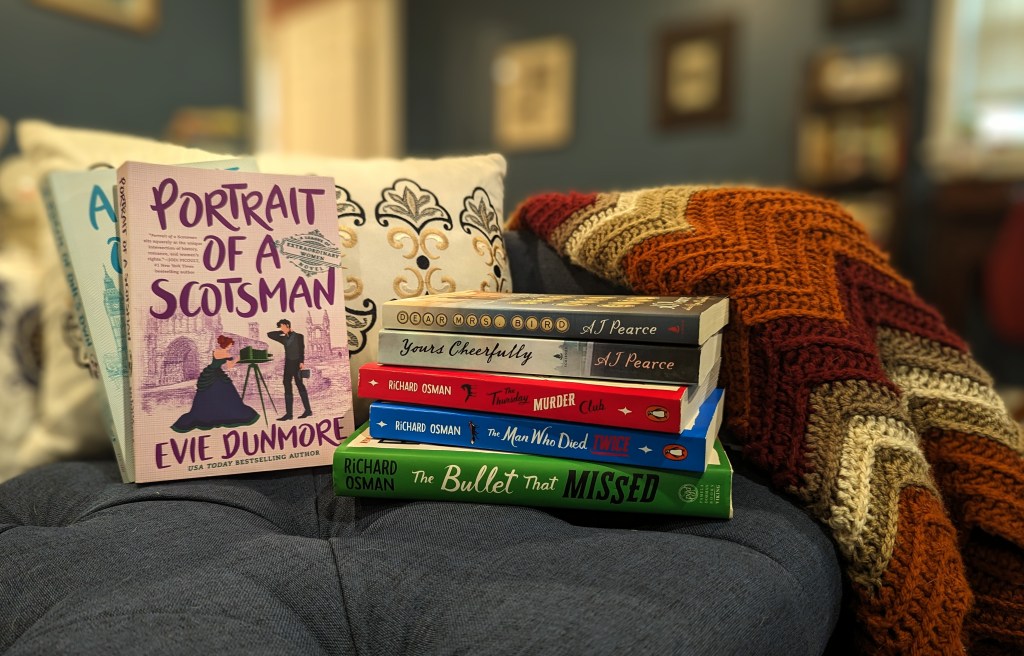
For instance, the murder mysteries I’m talking about are small town crimes solved by non-police officers (The Thursday Murder Club Series by Richard Osman is the perfect example). But what they really are is a story with characters you like taking an event that has upset a community and resolving it. In the end there will be an answer and consequences. And you usually don’t have to involve the police, who bring their own issues into a narrative, or if you do it’s a heartwarming officer who clearly fits in more with the novel’s outside detective(s) than the official police system. Even the murder victims are part of the comfort equation. If they are also criminals, great! You get a crime without the sadness, just a mystery. If they are a beloved member of the community, they get proper mourning and justice in the end. (Something we often lack in the real world.) So, when I pick up one of these murder mystery stories, I may not have any idea who committed the murder or how they will be caught, but I am confident I know the resolution on its way.
So what about other genres? One friend described how her favorite romance writers may change the characters and plot points, but the ending is the same. She knows there will be conflict and plenty of drama, but in the end the couple will be together and happy and whoever or whatever went wrong will be resolved. It’s all of the joy of love without any of the risk of heartbreak.
Some types of historical fiction can offer the same comfort, for example Dear Mrs. Bird and Yours, Cheerfully by AJ Pearce may be set during the height of World War II in Britain, but they also offer readers two women who have support systems to help them through loss and make progress even in the middle of the largest conflict in modern history. They even help other women struggling to provide for their families and look after their children. These stories are particularly comforting to me because I love all kinds of historical fiction, even the stories that end in sadness and suffering, so sometimes a story I know will end with resolution and improvement is just what I need. You cry a little, but you get a narrative hug in the end.
Once I quizzed those around me about the topic, I turned to the wider world. After all, social media has changed the terms we use when we talk about reading, (don’t forget, spicy used to mean how much chili pepper something had) and while there are plenty of spaces that recommend comfort reads, the conversation to me seems muddled. There is an undercurrent in many of the reviews and discussion of comfort reads that something is just that. Nevermind plenty of the books are also well written or funny or explore characters often sidelined in more “serious” literary novels. But it should also be understood the amount of trust readers have in writers who we feel will comfort us. If I pick up a book by a writer who has brought me comfort in the past, I am so grateful to be offered a new story with characters and plot points I don’t yet know, while also being confident in the feeling I will have when I finish it. It’s the bookshelf equivalent of a trust fall.
The lack of real appreciation for the power of comfort reading also means plenty of books get mislabeled. A historical fiction novel with two plucky female best friends trying to make their dreams come true, what else could it be if not a hilarious comfort read?! When I picked up Miss Benson’s Beetle by Rachel Joyce that was the description offered up by the back cover and the blurbs. Unfortunately (for me reading it at the time, not for the novel itself which is great) it was anything but funny and comfortable. There are devastating moments of heartbreak and rather than offering a great resolution, there is plenty of loss in this book from the first page to the last. Now there were plenty of personal reasons this book didn’t comfort me, but it was also a larger theme of the book. One of the main points of Miss Benson and her assistant Enid’s story is how they face their problems and grow stronger individually even though they are failed at every turn by society and their own families.
So, what has all of this staring at my bookshelf and picking my friend’s brains taught me? First, you’re not alone. Plenty of other readers grab a book off the shelf and settle in for an afternoon of mystery or love or even adventure to feel a bit better about the world, even if it seems a roundabout way to do it.
Second, a reminder of the lesson learned at the bottom of a cup of tea all those years ago: trust your instincts. Reviews and recommendations by strangers can be a great way to pick up something you’d never find yourself and blurbs and reviews can also point you towards your next great read, but if you really need a book that will warm your heart the second you turn the last page, have faith in yourself, your reader friends, and your favorite writers first.
 lost in the dust jackets